 English
 Japan


-
![[In-Depth Analysis] Which Industries Benefit Most from SMT Technology? — The Core Engine of Modern Electronics Manufacturing]()
[In-Depth Analysis] Which Industries Benefit Most from SMT Technology? — The Core Engine of Modern Electronics Manufacturing
This article provides an in-depth analysis of Surface Mount Technology (SMT) and its widespread applications across key industries such as consumer electronics, automotive, medical, telecommunications, and aerospace. It explores SMT’s core advantages — high precision, miniaturization, and production efficiency — and explains how it drives innovation and quality in modern electronics manufacturing. SMT is positioned not just as a production method, but as a strategic foundation for future intelligent and high-reliability manufacturing.
-
![Revealing the Secret Behind Material Choices: How to Make Your PCBA More Efficient, Reliable, and Cost-Effective]()
Revealing the Secret Behind Material Choices: How to Make Your PCBA More Efficient, Reliable, and Cost-Effective
This article explores how material selection shapes the performance, cost, and reliability of PCBA (Printed Circuit Board Assembly). It analyzes the impact of electrical, thermal, and mechanical properties, as well as the roles of solder alloys and flux in achieving high-quality connections. The discussion also covers strategies to balance performance with cost efficiency and highlights future trends toward eco-friendly and functional materials. By understanding the science behind material choices, engineers and manufacturers can create more reliable, efficient, and sustainable electronic prod
-
![Want to Know How to Choose Solder Materials and Flux? A Complete Guide to PCB Assembly Essentials]()
Want to Know How to Choose Solder Materials and Flux? A Complete Guide to PCB Assembly Essentials
This blog provides an in-depth analysis of solder material and flux selection in PCBA (Printed Circuit Board Assembly). It begins by comparing tin-lead and lead-free solders, outlining their characteristics and suitable applications. The article then explains the composition, classifications (rosin-based, no-clean, and water-soluble), and key performance indicators of flux. It further discusses the matching principles between solder and flux, common soldering defects with their causes and solutions, and methods to enhance soldering quality through temperature control, AOI, and X-ray inspection
-
![What is Surface Mount in PCB?]()
What is Surface Mount in PCB?
This blog provides an in-depth overview of Surface Mount Technology (SMT) and its vital role in modern PCB manufacturing. It explains the differences between SMT and traditional Through-Hole Technology (THT), outlines each stage of the SMT assembly process — including solder paste printing, component placement, reflow soldering, and inspection — and highlights the advantages of SMT in achieving high-density, miniaturized, and automated production. The article also discusses challenges such as thermal management and inspection complexity, while exploring future trends like AI-driven manufacturi
-
![Warehouse Shutter Controller PCBA — A Complete Guide to Design and Assembly]()
Warehouse Shutter Controller PCBA — A Complete Guide to Design and Assembly
This article introduces the complete process of developing a warehouse shutter controller PCBA at JY Company. From confirming PCB parameters, cost control, and component selection to SMT/THT assembly and final application, every stage is explained in detail. Readers will gain insights into cost-effective PCB manufacturing, quality assurance in PCBA assembly, and the real-world application of this controller in warehouse shutter systems. The article emphasizes both technical expertise and practical benefits, helping customers better understand how to optimize their products with reliable PCBA s
-
![Double-sided Flexible PCB (FPC) Screen Printing Technology: Key Processes and Quality Control]()
Double-sided Flexible PCB (FPC) Screen Printing Technology: Key Processes and Quality Control
This article explores the screen printing technology of double-sided flexible PCBs (FPCs), covering key processes such as upper-layer printing, carbon via punching and filling, lower-layer printing, and final inspection. By analyzing material selection, conductive ink control, and solutions to common defects, it highlights how to improve conductivity reliability and product quality, providing high-performance circuit solutions for consumer electronics, medical devices, and automotive applications.
-
![Representative of Smart Home Products in the IoT Era]()
Representative of Smart Home Products in the IoT Era
With the rapid development of the Internet of Things (IoT), smart home products have become an essential part of modern life. This article explores representative devices such as routers, smartphones, intelligent door locks, and smart speakers, highlighting their strengths and limitations. It also analyzes the critical role of PCB and PCBA technologies in enabling these innovations. Looking ahead, the integration of 5G, AI, and advanced circuit board solutions will make smart homes more intelligent, convenient, and secure.
-
![High-Performance Car Alarm System Development Case: A Full-Process Analysis from PCB Design to Supply Chain Management]()
High-Performance Car Alarm System Development Case: A Full-Process Analysis from PCB Design to Supply Chain Management
This blog presents a comprehensive case study on the development of a car alarm system, covering the entire process from PCB design, component selection, and housing mold development to supply chain management. It highlights the importance of meeting high reliability and mass production demands, optimizing the BOM to reduce costs, and collaborating with professional suppliers through efficient communication. The article concludes with key lessons learned and an outlook on the future integration of automotive electronics with the Internet of Vehicles (IoV).
-
![Common Issues and Improvement Methods in Manual Soldering]()
Common Issues and Improvement Methods in Manual Soldering
This article explores the critical role of manual soldering in PCB assembly, highlighting common defects such as solder bridging, cold joints, and tombstoning. It analyzes their root causes and provides practical improvement methods including proper iron tip maintenance, temperature control, and optimized PCB design. By applying these techniques, electronics manufacturers can enhance soldering quality, reduce rework, and ensure product reliability.
-
![Power Bank PCB Design and Mass Production: A Case Study of Precision and Efficiency]()
Power Bank PCB Design and Mass Production: A Case Study of Precision and Efficiency
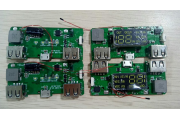
This article provides a detailed overview of the design and mass production process for two Quick Charge power bank PCBs for an Indian customer. It covers CAD revision, PCB optimization, prototype development, and rigorous testing, all while adhering to IPC-6012 Class 2 and UL certification standards. Key highlights include USB connector cold solder prevention, LCD soldering techniques, and close customer collaboration, demonstrating our expertise in delivering high-quality products efficiently.



Recommended
-
The Invisible Moisture Inside Electronic Components: How MSD Management Protects PCBA Quality
Moisture absorbed by electronic components can cause package cracking, internal delamination, and hidden reliability issues during reflow soldering. This articl ...
-
Why Is Your PCBA Quote Always Changing? The Engineering Data Behind an Accurate PCB Assembly Quote
An accurate PCBA quotation depends on far more than component prices. This article explains how BOM data, PCB specifications, SMT complexity, testing, firmware ...
-
The PCB Surface Is More Important Than You Think: How Surface Finish Shapes PCBA Performance
This article explores how PCB surface finish affects PCBA soldering performance and long-term reliability. It examines ENIG, HASL, and OSP finishes, along with ...
-
The Solder Joint Looks Perfect—So Why Did the PCBA Fail? Understanding Hidden Solder Joint Reliability
This article explores how solder joint reliability affects the long-term performance of PCBA. It explains the roles of thermal cycling, CTE mismatch, IMC format ...
-
Ionic Contamination in PCB/PCBA: SEO Content Brief
Ionic contamination can remain invisible on a PCB or PCBA while increasing the risk of corrosion, leakage current, and electrochemical migration. This article e ...
-
From PCBA Prototype to Mass Production: A Practical NPI Roadmap for Industrial Control Electronics
Learn how to move an industrial-control PCBA from prototype to stable mass production through DFM, NPI, validation, pilot builds, traceability, and process cont ...
Hot
- The Invisible Moisture Inside Electronic Components: How MSD Management Protects PCBA Quality
- Why Is Your PCBA Quote Always Changing? The Engineering Data Behind an Accurate PCB Assembly Quote
- The PCB Surface Is More Important Than You Think: How Surface Finish Shapes PCBA Performance
- The Solder Joint Looks Perfect—So Why Did the PCBA Fail? Understanding Hidden Solder Joint Reliability
- Ionic Contamination in PCB/PCBA: SEO Content Brief
- From PCBA Prototype to Mass Production: A Practical NPI Roadmap for Industrial Control Electronics
- When PCBA Gets Hot: How Thermal Design Determines the Reliability of Modern Electronics
- Complete Guide to PCBA Traceability: Compliance, Quality, and ROI
- 【From Laboratory to Mass Production】How Flexible PCBA Manufacturing Accelerates Electronic Innovation and Product Commercialization
- 【The New Era of Smart Manufacturing】How AI Vision Inspection Is Transforming PCBA Quality Control: From Manual Inspection to Intelligent Defect Prediction in Future Factories


 Skype: